
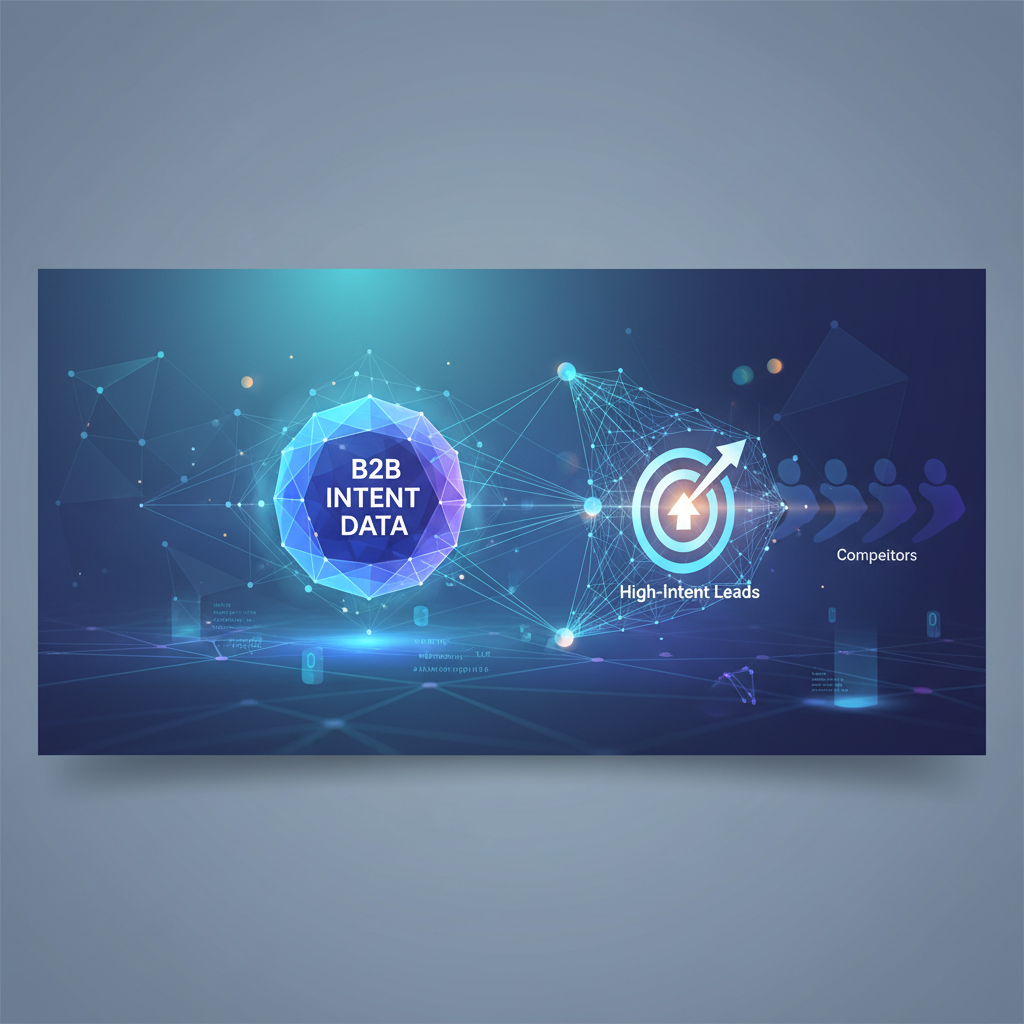
In the hyper-competitive B2B market, waiting for leads to find you is a recipe for falling behind. The modern buyer's journey is complex, self-directed, and often happens in the shadows, long before they ever fill out a form on your website. They are researching solutions, comparing vendors, and reading reviews—all without you knowing. This is the 'dark funnel,' and it's where deals are won and lost before the sales team even gets a chance to engage. So, how do you shine a light on these hidden opportunities and engage buyers at the perfect moment? The answer is B2B intent data.
This guide will demystify intent data, transforming it from a complex buzzword into an actionable strategy. We'll explore how to identify buying signals, build a proactive prospecting workflow, and ultimately capture high-intent leads before your competitors know what hit them.
Understanding the Power of Intent Data in the Modern B2B Landscape
A B2B intent data strategy is no longer a luxury for enterprise teams; it's a critical competitive advantage for businesses of all sizes. It marks a fundamental shift in demand generation, moving from a passive, 'cast a wide net' approach to an active, precise signal-monitoring methodology. Instead of just generating content and hoping the right people find it, you actively listen for digital cues that indicate a company is in-market for your solution right now.
The core benefit is efficiency. By focusing your sales and marketing resources exclusively on accounts demonstrating active purchase intent, you dramatically reduce Customer Acquisition Cost (CAC). Your team spends less time on cold, unresponsive prospects and more time engaging warm, receptive buyers who are already exploring solutions like yours. This focus is crucial when you consider how much research happens before a sales conversation. According to Gartner research, B2B buyers spend only 17% of their time meeting with potential suppliers when they are considering a purchase. The rest of that time is spent researching independently online and offline.
Understanding the signals within this 'dark funnel'—the vast, un-trackable portion of the buyer's journey—is the key to unlocking growth. Intent data provides the visibility needed to identify these accounts and engage them with relevant, timely outreach.
The Anatomy of Intent: First-Party vs. Third-Party Data Signals
To build a comprehensive intent data strategy, you must understand the two primary types of signals: first-party and third-party. Relying on only one leaves significant blind spots in your view of the market.
First-Party Intent Data
This is the data you own and collect directly from your audience through your assets. It's the most reliable indicator of interest because it involves a direct interaction with your brand.
- Website Activity: This is a goldmine of first-party intent. Tools providing B2B website visitor tracking software can de-anonymize company traffic, showing you which accounts are browsing your pricing page, case studies, or feature descriptions. A platform like VisitReveal can even send a Lead Re-Visit Notification alerting you the moment a known prospect from your CRM returns to your site.
- Content Engagement: When a prospect downloads a whitepaper, registers for a webinar, or views documents from your Sales Content Library, they are signaling a specific interest or pain point.
- CRM & Product Usage Data: Your B2B Sales CRM contains a rich history of past interactions, while product usage data (for SaaS companies) can reveal upsell or churn-risk signals.
Third-Party Intent Data
This data is collected from external sources across the web, providing a broader view of an account's research activities beyond your owned properties. It helps you find accounts that are in-market but haven't discovered your brand yet.
- Surging Keywords & Topics: This data identifies when an account is consuming an unusual amount of content related to specific topics or keywords relevant to your business (e.g., 'data integration platforms,' 'competitor X reviews').
- Review Site Activity: Prospects checking out your company or your competitors on G2, Capterra, or other review sites is a powerful bottom-of-funnel signal.
- Industry Publications & Forums: An account's activity on trade publication websites or industry forums provides context about their current challenges and priorities.
The biggest challenge is 'Identity Resolution'—the process of mapping anonymous online activities (like surging keyword research from a specific IP address) back to a specific company. This is where specialized intent data providers shine. A hybrid approach, combining the high-fidelity signals of your first-party data with the broad reach of third-party data, is essential for a complete 360-degree view of your target accounts.
Techniques for Identifying Surging Keywords and Topic Clusters
The effectiveness of third-party intent data hinges on the quality of your keyword and topic list. A poorly constructed list will result in noisy, irrelevant signals, while a well-crafted one will deliver high-quality, in-market accounts to your sales team.
Building Your Intent Keyword List
Start by brainstorming terms across several categories:
- Pain Points: What problems does your solution solve? (e.g., 'low sales productivity,' 'inaccurate lead data')
- Solution Categories: What type of product are you? (e.g., 'CRM for small business,' 'sales automation software')
- Competitor Names: Include brand names, product names, and 'competitor vs. competitor' comparison terms.
- Integration Partners: If your product integrates with major platforms (like Salesforce or HubSpot), monitor for research around those as well.
- Bottom-Funnel Terms: Don't forget keywords that signal imminent purchase, such as 'pricing,' 'cost,' 'demo,' 'trial,' and 'reviews.'
Monitoring Surges and Filtering Noise
Simply knowing a company read one article isn't enough. The real power lies in identifying 'surges'—a statistically significant increase in research activity around a topic cluster compared to that account's normal baseline. This indicates the topic has moved from a passive interest to an active project.
It's equally important to filter out the noise. For instance, a university researching a topic for academic purposes is not an intent signal. Likewise, a current customer researching a competitor might be a churn risk, not a new prospect. Effective intent platforms allow you to set thresholds and filters to ensure your sales team only receives high-quality, actionable alerts.
Building an Intent-Based Prospecting Workflow for Sales Teams
Collecting intent data is only half the battle; activating it is what drives revenue. This requires tight alignment between marketing and sales and a clear, automated workflow.
- Define the 'Intent Threshold': Sales and marketing must agree on what constitutes a 'sales-ready' intent signal. Is it two people from an account researching a competitor? Or one person downloading a pricing guide? This Service Level Agreement (SLA) prevents wasted effort and ensures SDRs focus on the best opportunities.
- Automate Account and Contact Delivery: Once an account crosses the intent threshold, it should be automatically routed to the correct sales rep's queue within your CRM. Powerful Sales Enablement Software can enrich this account with ideal contact personas, turning an anonymous signal into a list of people to contact.
- Execute the 'Intercept Strategy': When you get a signal that a target account is reading reviews of your top competitor, it's time to act. Don't wait. An SDR can reach out with a personalized message like, 'Saw your company is exploring solutions for [pain point]. While you're evaluating options like [Competitor], I wanted to briefly share how we approach it differently.' This timely intervention can divert a deal in your favor.
- Personalize Outreach at Scale: Generic outreach doesn't work. Use the specific intent signal to personalize your messaging. If they're researching a specific feature, lead with that. If they're reading about a pain point, frame your solution around it. Tools like VisitReveal's Sales Collateral Generator allow reps to create personalized follow-up pages in minutes, complete with a personal video message addressing the exact intent signals observed. This level of personalization dramatically increases reply rates. Pairing this with automated Email Sequences for follow-up ensures you stay top-of-mind.
Implementing Intent Data in B2B Tech Sales: A Step-by-Step Integration
Integrating intent data into your tech stack transforms it from a standalone tool into a core part of your revenue engine. The process involves careful planning and execution.
Step 1: Integration with Your Core Systems
Your intent data platform must have native integrations with your CRM (like Salesforce, or VisitReveal's built-in B2B Sales CRM) and marketing automation platform. This ensures a seamless flow of data, allowing you to trigger workflows, score leads, and assign tasks automatically. Evaluating whether an API-first deployment or a simple dashboard-led approach is right for your team is crucial. For companies unsure about their current infrastructure's readiness, conducting a SaaS Growth & Marketing Audit can reveal gaps and opportunities in their marketing tech stack.
Step 2: Build Automated SDR Playbooks
Don't leave the follow-up to chance. Create specific, automated playbooks for different intent scenarios. For example:
- 'Competitor Research' Playbook: If intent shows an account researching a competitor, automatically add the top 3 personas from that account to an outreach sequence focused on your key differentiators.
- 'Pricing Page Visit' Playbook: If a known prospect revisits your pricing page, create a high-priority task for the account owner to call them within the hour.
Step 3: Use Intent for Customer Retention
Intent data isn't just for new business. Set up alerts to monitor your existing customer base. If a customer suddenly starts researching competitors, it's a massive red flag for churn. This signal allows your Customer Success team to proactively reach out, address any issues, and reinforce your value proposition before it's too late.
Strategic Comparison: Best Intent Data Providers for B2B Sales
The intent data market is crowded, with several key players offering different methodologies and strengths. Understanding these differences is key to choosing the right partner.
- Industry Leaders: The most well-known providers include Bombora, 6sense, Demandbase, and ZoomInfo. Each has a slightly different approach to data collection and activation.
- Data Collection Models: Bombora is famous for its 'Data Co-op,' where a consortium of B2B publishers provides exclusive data, leading to high accuracy. Other providers may use 'bidstream' data (from ad exchanges) or web scraping models. The source of the data directly impacts its quality and relevance.
- Cost and ROI Modeling: Pricing can vary wildly, from a few thousand dollars a month to six-figure annual contracts. The key is to model the potential ROI. How many new deals would you need to close to justify the cost? Understanding your potential return on investment is crucial, and tools like a Fractional CMO Calculator can help model the financial impact of strategic marketing investments.
- Data Privacy and Compliance: With regulations like GDPR and CCPA, it is non-negotiable to work with a provider that is fully compliant. Ensure they have transparent processes for handling data and consent, as failure to comply can lead to severe penalties.
Measuring Success: KPIs and Long-Term Impact on the Pipeline
To prove the value of your intent data investment, you must track the right Key Performance Indicators (KPIs). Moving beyond vanity metrics is essential for demonstrating real impact on the bottom line.
Key Metrics to Track:
- Pipeline Velocity: Measure the time it takes for an intent-qualified lead to move through the sales cycle compared to a non-intent lead. You should see a significant reduction.
- Win Rates: Are you closing a higher percentage of deals that originated from an intent signal? This is a primary indicator of lead quality.
- Average Deal Size: Often, intent-driven leads are better informed and have a clearer budget, which can lead to larger deal sizes.
- Account-Based Engagement: Track the number of meetings booked and opportunities created within your target account list after implementing your intent strategy.
Attribution modeling can be complex, but it's important to give credit to intent signals as a key touchpoint in the journey. This isn't just a a 'set it and forget it' strategy. You must continuously optimize your keyword lists, account lists, and outreach messaging based on which signals are converting into actual revenue. A regular SaaS Marketing Assessment can provide a structured framework for reviewing performance and identifying areas for improvement.
Mastering intent data requires a combination of the right technology, a well-defined strategy, and strong sales and marketing alignment. For companies looking to implement such advanced strategies, seeking expert guidance from a Fractional CMO for SaaS can provide the strategic leadership needed to succeed. For those who want to dive deeper into modern marketing strategies, exploring a comprehensive SaaS Marketing Book can offer invaluable insights. By embracing intent data, you move from hoping for leads to proactively creating conversations, giving you an undeniable edge in a crowded market.